
History of the parish
Almost five centuries of history on Calle de Atocha: from a small hermitage in 1541 to a church destroyed in the Civil War and rebuilt in 1959, with an archive that includes Cervantes, Lope de Vega and Bécquer.
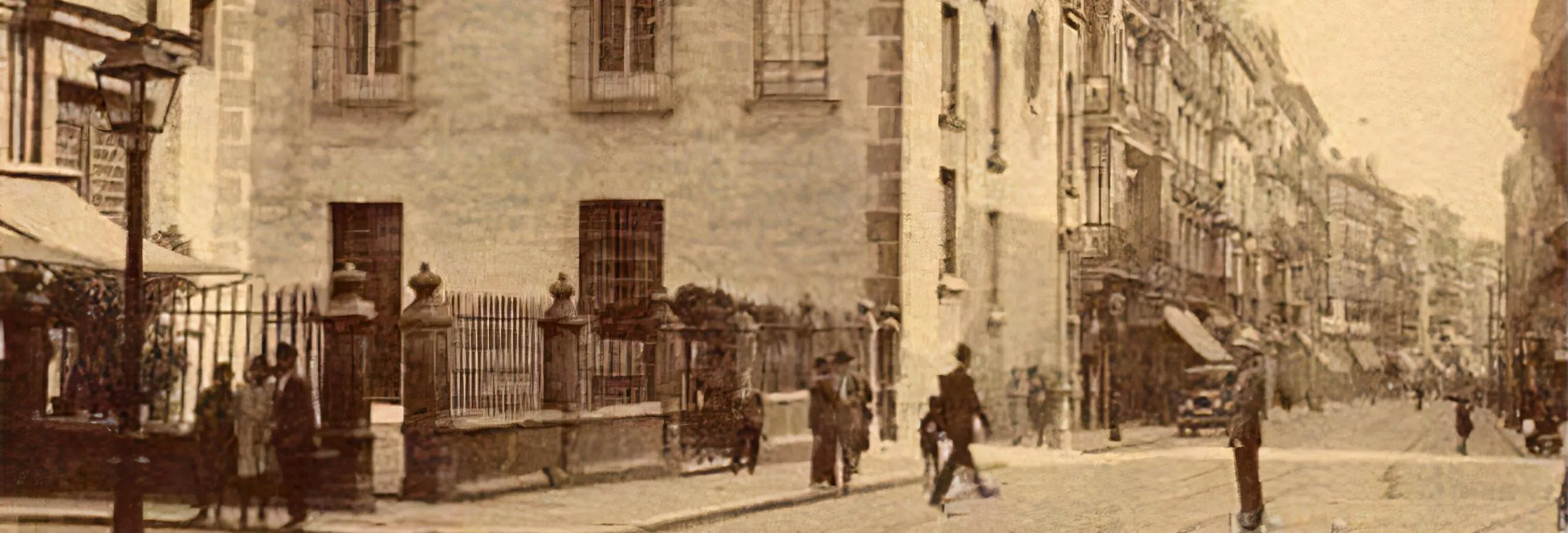
“The parish church of San Sebastián, like some people, has two faces… or rather, the church does… two faces that are surely more charming than beautiful: with one it looks towards the poor quarters, along Calle de Cañizares; with the other, towards the merchant gentry of Plaza del Ángel.”
This is how Benito Pérez Galdós opens “Misericordia”, a faithful portrait of the life of the humblest people in the Madrid of his day. The novel begins at the back of the parish church, and Galdós rightly gives it two features that have always gone with it: grandeur and ruin. Together they have made it one of the most important monuments in the history of Madrid.
Its golden age runs from its foundation in the 16th century until its near-total destruction in 1936. Almost four centuries were cut short by the war, but the parish rose from its ashes and, after the rebuilding, holds many treasures well worth a visit.
The first hermitage
On 1 May 1541, the Archbishop of Toledo, Cardinal Juan de Tavera, ordered a small hermitage to be built under the patronage of Saint Sebastian.
Antonio Sillero’s church
In 1554 the hermitage gave way to a larger church, commissioned from the master builder Antonio Sillero. Lack of money delayed the work, and in 1576 the vault of the nave had still not been closed. The church opened for worship in 1578, but work continued on the main chapel, the sacristy, the cemetery and the decoration of the church.
The façade was Sillero’s work; the tower was by the master builder Lucas Hernández. It was begun in the early 17th century and must have looked very like that of San Ginés, but nothing of it remains.
Once the work was finished, several congregations and confraternities settled in the church: that of Mercy, one of the oldest in Madrid; that of the Christ of Faith, or of the Palace Halberdiers; that of Our Lady of the Novena, of Spanish actors; and that of Our Lady of Bethlehem, of the architects. Over the centuries, their patronage and private donations filled the church with works of art.
The destruction of 1936
All that splendour was lost in the Civil War. In the first months of the war, the most radical groups on the Republican side attacked and burned many Catholic churches. San Sebastián, right in the city centre, was attacked and almost completely burned; only the historical archive was saved, and it still holds a wealth of information about the building of the parish church and its close ties with the literature of the Spanish Golden Age.
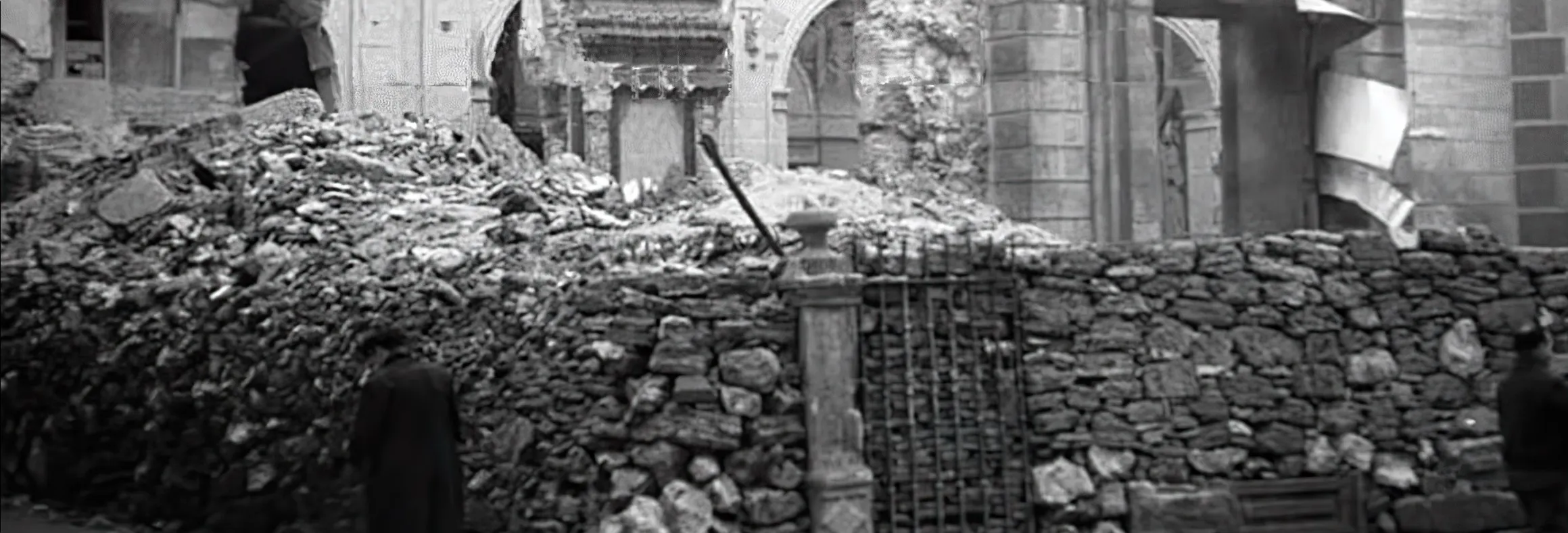
In late August 1936 the Nationalist side also began bombing Madrid. On 18 November, during a Condor Legion raid on Plaza de Antón Martín, several shells fell on the church, which was suspected of holding a Republican army food store. Only part of the chancel, the Architects’ chapel, the doorway and the tower were left standing.
The tower was later pulled down on the orders of the City Council, which wanted to widen Calle de San Sebastián. The plan was to rebuild it further back, but this was never done.
The rebuilding
Rebuilding began in 1943, led by the architect Francisco Íñiguez Almech. The first design aimed to restore the old church, but the uneven ground, the need to preserve the remains of the main chapel, the Architects’ chapel, the tower and the Actors’ chapel, and the widening of Calle de San Sebastián forced a complete change in the orientation of the church.
The high altar moved to one side and the new main chapel was placed next to the old cemetery, which disappeared with the works; a flower shop stands there today. According to the parish archive, Lope de Vega was buried there. When his heirs stopped paying for the crypt, his remains were moved to the ossuary, which is why they can no longer be identified.
The church was left in two parts: the oldest, with the chapels of Bethlehem, the Sacred Heart of Jesus and Our Lady of Mercy, and the newest, with an octagonal plan, covered by a large central dome with a lantern and with the choir at the back. San Sebastián reopened its doors in 1959.
A protected heritage site
On 16 October 1969 the church was declared a Bien de Interés Cultural, in the category of historic and artistic monument, partly because of its magnificent archive. It holds the baptism, marriage or death records of some of the most illustrious figures of Spanish culture: Miguel de Cervantes, Lope de Vega, Leandro Fernández de Moratín, Luis de Madrazo, Jacinto Benavente, Ventura Rodríguez, Juan de Villanueva, José de Espronceda, Mariano José de Larra and Gustavo Adolfo Bécquer.